
Hermetic Seam Sealing of Optical Devices
- TOP
- Parallel Seam Sealing
- Applications of Parallel Seam Sealing
- Hermetic Seam Sealing of Optical Devices
To maintain the performance and reliability of optical devices over the long term, "hermetic sealing”-which prevents the ingress of outside air, moisture, and foreign matter-is essential.
In particular, hermetic sealing by parallel seam sealing is an effective method for reliably protecting the components inside the package from the external environment, ensuring that optical devices maintain stable, high performance.
This article provides a detailed explanation of the mechanism of hermetic sealing by parallel seam sealing, its importance in optical devices, and the advantages of seam sealing process.
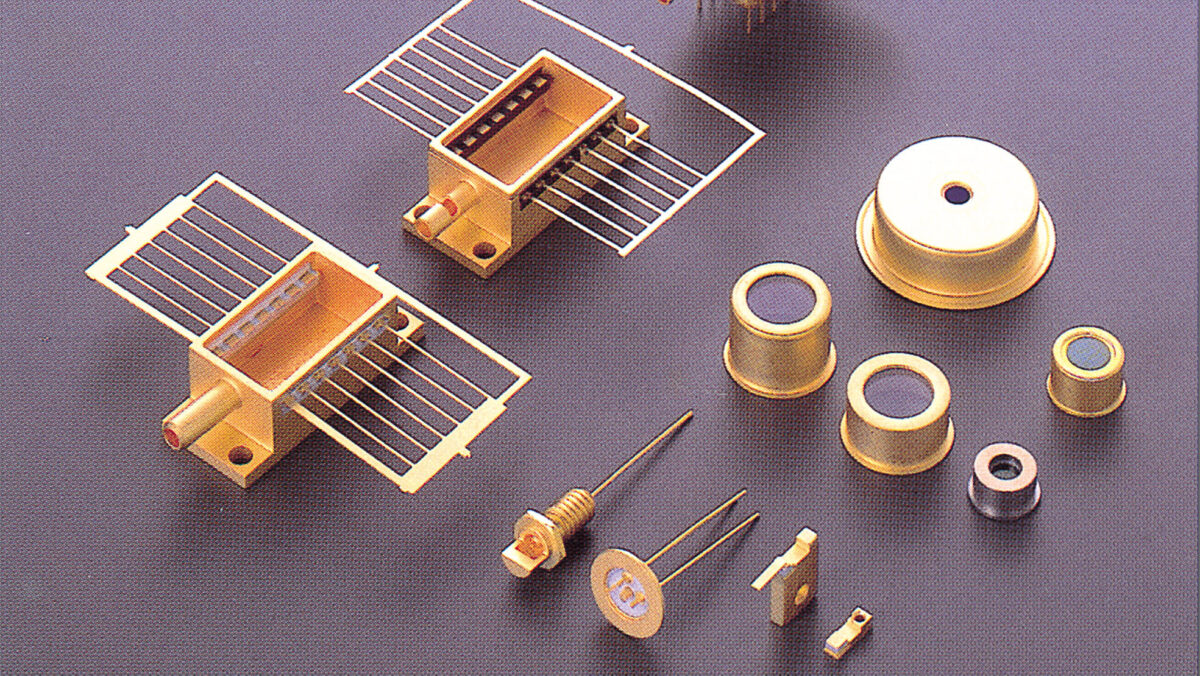
What Is Hermetic Sealing by Parallel Seam Sealing?
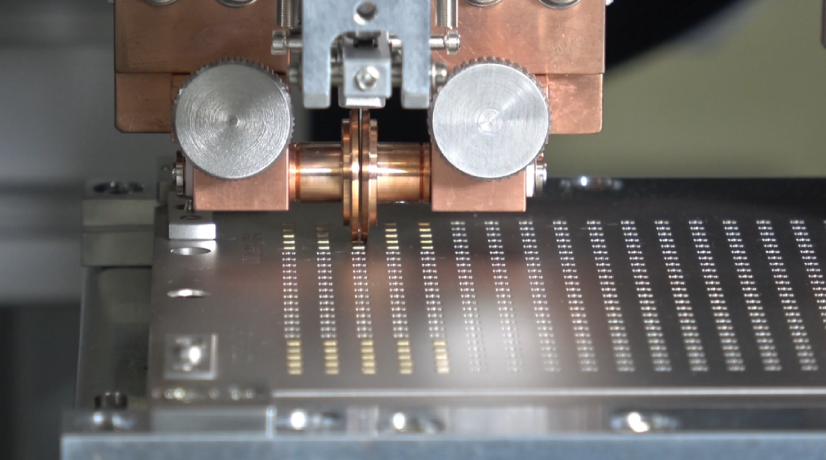
Parallel seam sealing is a hermetic sealing technique in which a metal lid is welded tightly to the case (package) of an electronic component, completely sealing out external air.
By continuously welding the package and lid while rolling the roller electrode, airtightness is achieved by completely sealing the gap between the package and lid.
Components within a package that is hermetically sealed by parallel seam sealing are isolated from the outside air, allowing stable operation over an extended period.
Reasons Why Hermetic Sealing Is Required for Optical Devices
Optical devices include optical communication devices, photocouplers, image sensors, and IR sensors. These devices transmit or receive light.
Optical devices include optical communication devices, photocouplers, image sensors, and IR sensors. These devices transmit or receive light.
Hermetic sealing is essential for manufacturing optical devices free from condensation and foreign matter contamination.
By Hermetically Sealing optical devices, performance degradation, corrosion, and failure of optical and electronic components can be prevented, ensuring stable performance over long periods.
Benefits of Hermetically Sealing Optical Devices by Parallel Seam Sealing
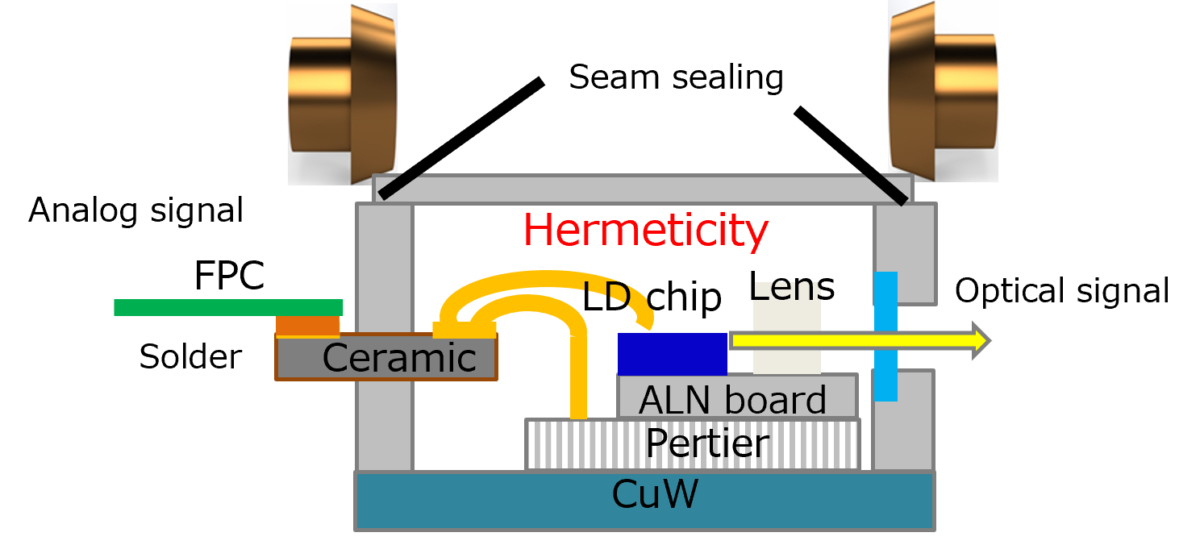
Solder sealing and parallel seam sealing are methods used to hermetically seal the package of optical devices.
Parallel seam sealing is recommended for the hermetic sealing of optical devices.
In solder sealing, a furnace is used to melt a solder alloy (such as Au-Sn or Pb-Sn) between a metal or ceramic package and its lid to form a hermetic seal.
There are concerns that the heat generated when melting the solder may damage internal components, or that tiny voids (air bubbles) may form at the joint, reducing airtightness.
Parallel seam sealing is a resistance welding method used to join a metal lid to a ceramic or metal package that features a metallized bonding area (seal ring) on its surface.
Unlike solder sealing, this method heats only the joining perimeter and completes the welding instantaneously, so almost no heat is transferred to the internal components. Furthermore, no voids are formed.
Parallel seam sealing enables hermetic sealing with a leak rate of 1×10⁻¹⁰ Pa·m³/sec or less, thereby preventing moisture ingress and maintaining a high level of airtightness.
By preventing condensation, which can affect the performance of optical devices, and preventing oxidation and contamination, the long-term reliability of optical devices is improved.
Furthermore, if the parallel seam sealing is done properly and initial quality requirements such as leak rate are met, the leak rate will not degrade over time.
We recommend considering parallel seam sealing for the hermetic sealing of optical devices.
Hermetic Seam Sealing of Optical Devices
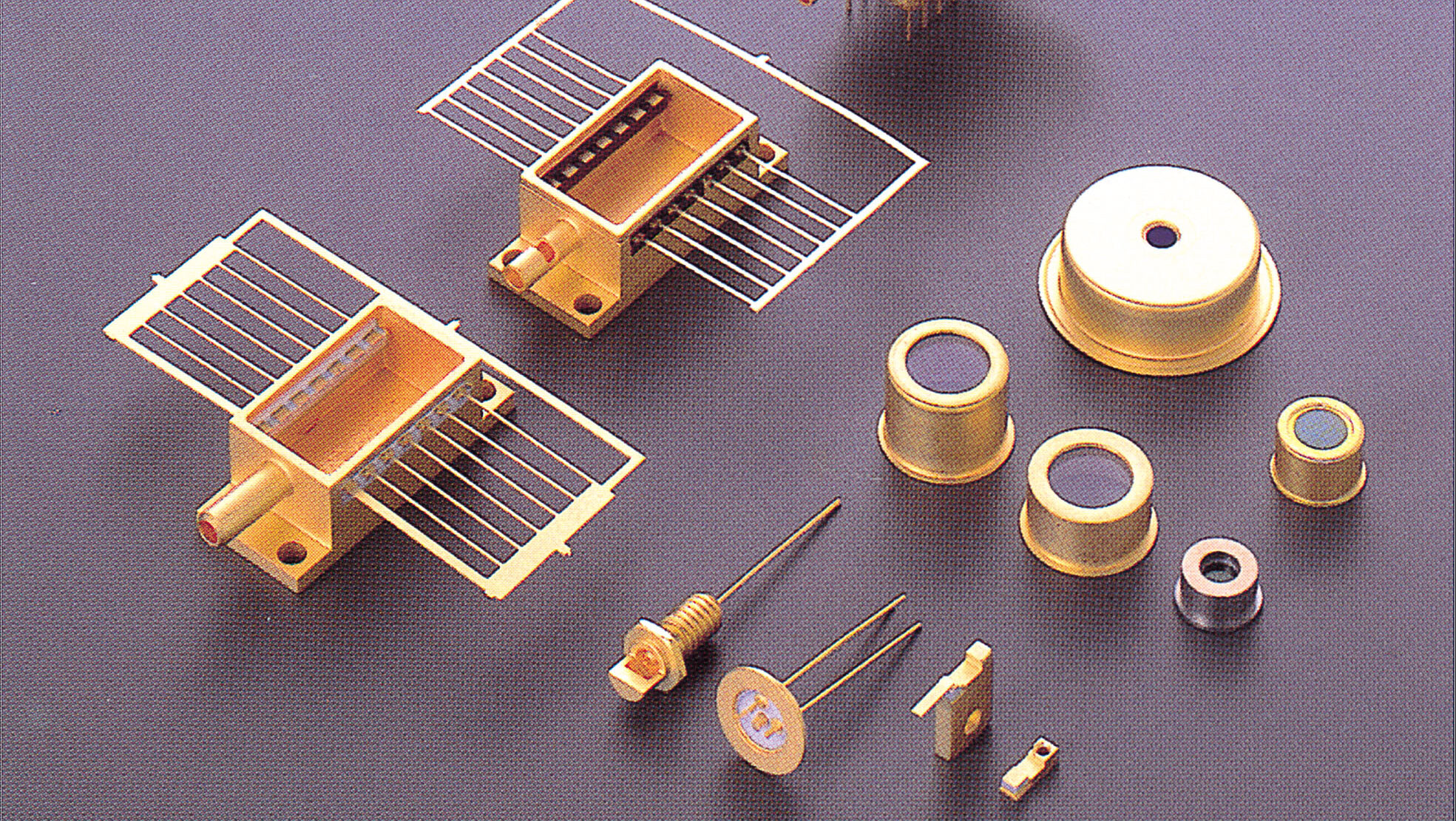
| Joining Method | Parallel Seam Sealing |
|---|---|
| Processing Method | hermetically sealing |
| End Products | Optical transceiver |
Sample test
We will be pleased to test your sample with our proposed joining method, and return it with a report.
Related Link
Applications
- Hermetic Sealing for Optical Transceivers- Explaining the features of Parallel Seam Sealing
- Hermetic sealing of crystal device and MEMS